
Frequently Asked Questions
Our support team sometimes notices they’ve received the same question a few times. When that occurs, we add it to our FAQ queue, to make a blog post accessible to everyone. These FAQs include how to get devices working, questions about the display industry, questions about microcontrollers, and more! Do you have a question not covered here? Contact Crystalfontz Support.
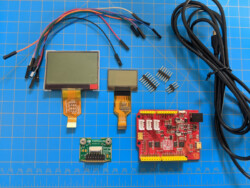
Graphic LCD Adapter Board: CFA10110 Getting Started
Relevant Displays and Kits Do you need help getting started with your graphic LCD and CFA10110 adapter board? This getting started guide helps bring up any of the following displays or kits: If you need a guide for the CFAG12864T3 or CFAG12864U3 using a generic breakout board, check out this getting started guide or our […]
Graphic LCD Adapter Board: CFA10110 Getting Started Read More »
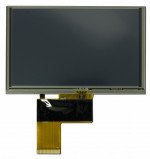
Resistive Touch vs. Capacitive Touch
When deciding between resistive and capacitive touch, be sure to consider where as well as how the display will be used.
Resistive Touch vs. Capacitive Touch Read More »
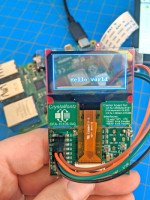
Transparent OLED on Raspberry Pi
One of our most frequently asked questions is “Can I use the transparent OLED with a Raspberry Pi?” The answer is a resounding Yes! The transparent OLED can be driven by the GPIO pins of the RPi. And even better? It’s really quite simple! How To Use a Raspberry Pi to Run a Transparent Display
Transparent OLED on Raspberry Pi Read More »

Display Supply Chain: What to Expect in 2021
We know that December is often a planning and logistics heavy month. We want to let you know what to expect from your display supplier in the coming months. Chinese New Year Every year at this time, we at Crystalfontz are in mid-swing planning for Chinese New Year. Unfortunately for us but luckily for you,
Display Supply Chain: What to Expect in 2021 Read More »

Wishlist Giveaway!
We want to give you what you want! Let us know what Crystalfontz displays or breakout boards are on your wish list. We’ll be selecting a few winners, so let your friends know! Maybe a transparent OLED and breakout board? Maybe an EVE module for a project with some cool graphics? You tell us! Christmas
Wishlist Giveaway! Read More »
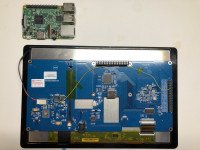
Turn HDMI Display Backlight Off When Raspberry Pi is Off
We were recently working with a customer who was using our 10.1″ HDMI display with a Raspberry Pi, but he had run into a problem. When the Raspberry Pi shut down, he needed the display backlight to also turn off and stay off. Since the backlight on the display turns on if uncontrolled, when the
Turn HDMI Display Backlight Off When Raspberry Pi is Off Read More »
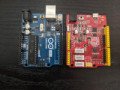
On the Level: Arduino and Displays
A Crystalfontz aficionado may notice that we sell and recommend an Arduino clone, the Seeed Studio Seeeduino, for use with many of our displays. The Seeeduino is a clone of the extremely popular Arduino Uno microcontroller. However, the Seeeduino offers one major advantage over the standard Arduino Uno; it can level shift its I/O lines
On the Level: Arduino and Displays Read More »
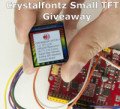
Small TFT Display Kit Giveaway
Enter to win Crystalfontz’s August/September giveaway. Entries close September 13, 2020. Giveaway extended to October 1! The winner will receive a 1.3″ TFT LCD module with a breakout board, wired up to an ESP32 running demo code to play video! Small TFT Display Kit The giveaway product may be an engineering sample. Any taxes, duties,
Small TFT Display Kit Giveaway Read More »
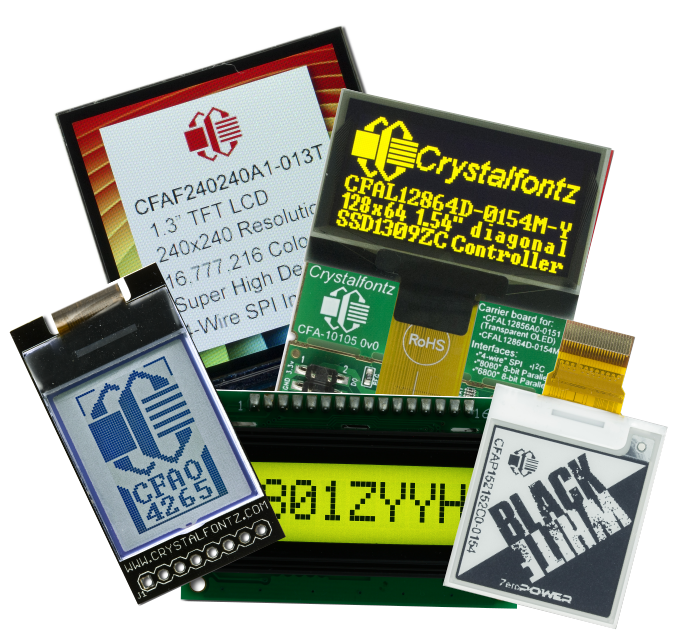
Choosing a Display: Overview
There is a wide world of display technology out there and it can be difficult to decide which type of display will work best for a given project. This post will help narrow down your options. Remember that the display is often the main human interface to a product, so it’s important to find a
Choosing a Display: Overview Read More »
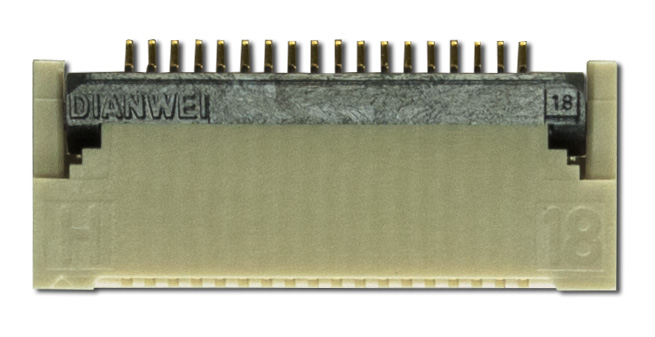
ZIF Connectors: Everything You Need to Know
There are two main ways a display can be connected to a PCB. Some displays are solder-down, requiring fine pitch soldering to connect the tail to the contacts on the PCB. Others use Zero Insertion Force (ZIF) connection. With a ZIF connection, the tail of the display is simply slid into a connector. The tail
ZIF Connectors: Everything You Need to Know Read More »
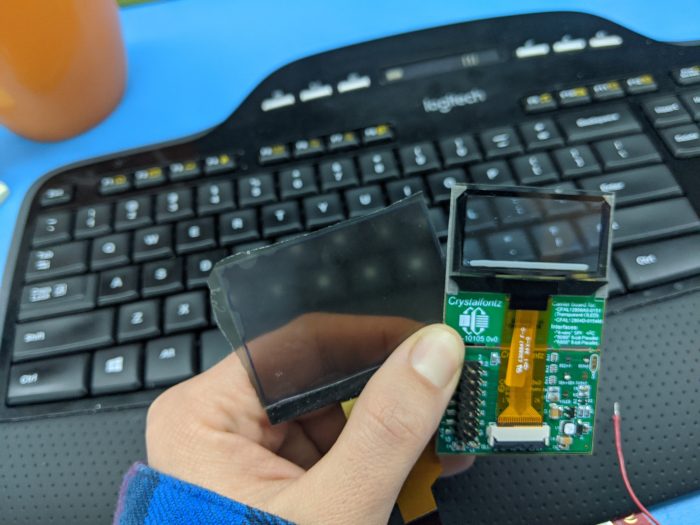
Transparent Display: How to Hack Together Your Own Transparent Display
DIY Transparent Display The transparent display we offer for sale (CFAL12856A0-0151) is an OLED (Organic Light Emitting Diode) display. OLED displays produce images by emitting light in the corresponding color. To produce black in a normal OLED, the pixels are simply turned off. With the transparent display, if the pixels are turned off, the display
Transparent Display: How to Hack Together Your Own Transparent Display Read More »